
“We are all made of star stuff”, as Carl Sagan used to say. This little quote is insanely deep and mind-blowing, if you really think about it. Everything you see around you, every screen, every leaf, every North Korean missile – it’s all made of elements that once were a part of a star. Ain’t that trippy as hell?
It’s impossible not to love space, especially, when you see photos like these. Remember, these are ALL pictures of various celestial bodies, galaxies, and nebulae. There’s nothing Earth-related there, and it makes my head hurt, but in a good way. Now just try to relax and enjoy the ride.
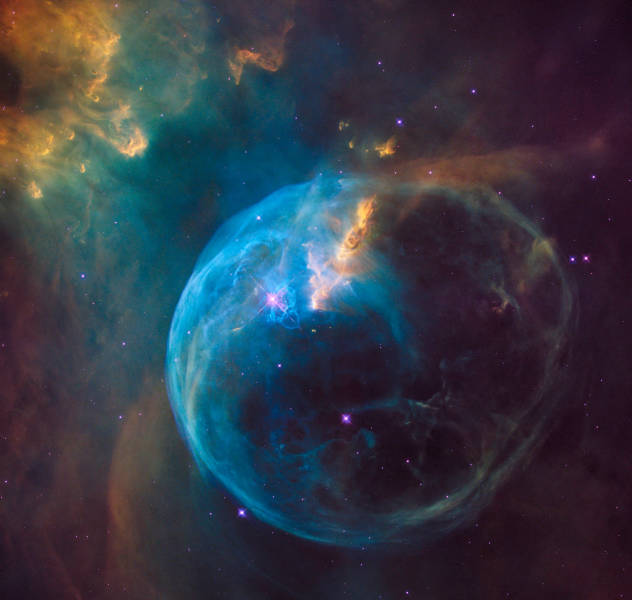
1. This is the Bubble Nebula, and it’s only 8,000 light-years away from Earth. Basically, we’re cosmic neighbors.
 View 31 photos
2. A group of stars that are held together by mutual gravitation is called an open cluster. This is one of those open clusters, located in the Scorpius constellation.
 View 31 photos
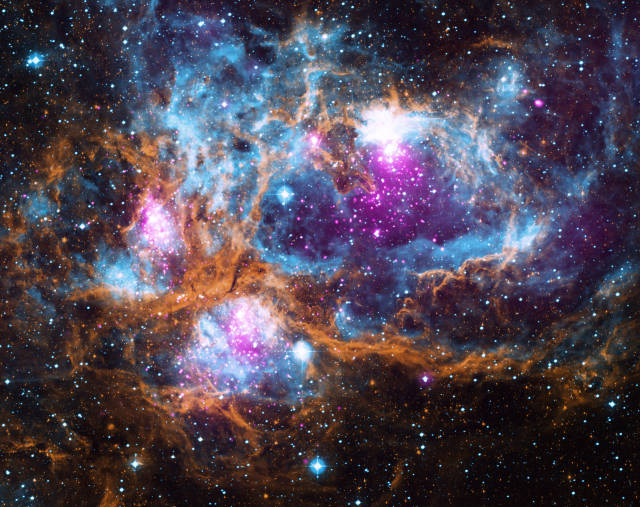
3. This beauty is the Lobster Nebula, and it is only 5,500 light-years away from Earth.
 View 31 photos
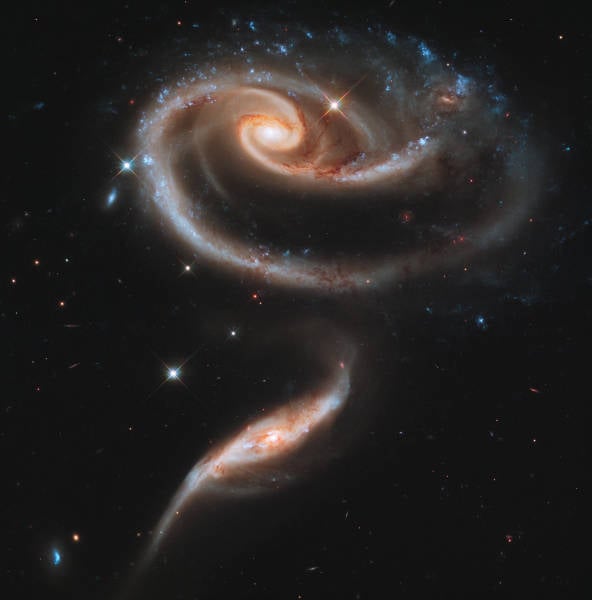
4. Two galaxies swirling in an infinite (but not really) dance or passion and mutual destruction, caused by the gravitational pull of the lower one. Remember that there’s no up or down in space, though.
 View 31 photos
5. Jupiter – the largest planet in our Solar System. But you probably knew that already. Did you also know that its trademark Great Red Spot is 1.3 times as wide as Earth?
 View 31 photos
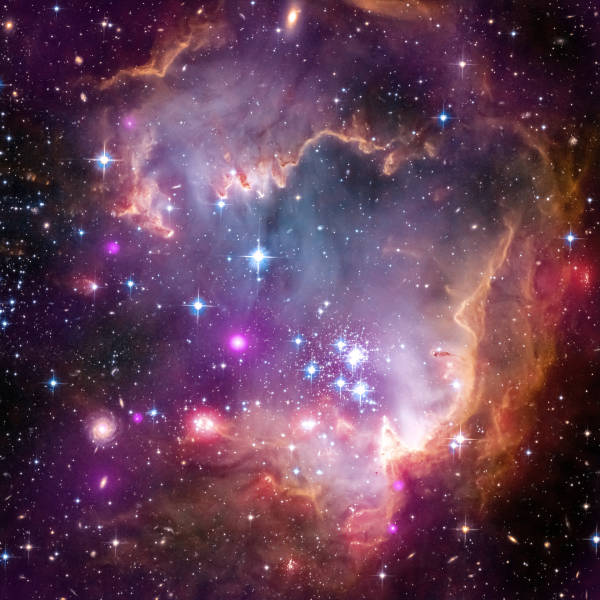
6. NGC 602 is a gorgeous looking open cluster, located in the Small Magellanic Cloud (SMC), and it’s one of the closest galaxies to the Milky Way.
 View 31 photos
7. What the hell is that monstrosity? It’s just the Carina Nebula mostly made of gas and dust, that sort of resembles an elephant, no big deal.
 View 31 photos
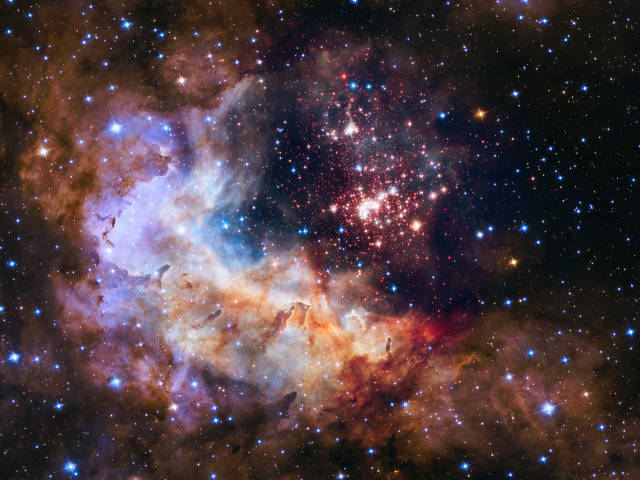
8. About two million years ago this cosmic dust bunny was a bunch of stars. Now it’s called the Westerlund 2 cluster.
 View 31 photos
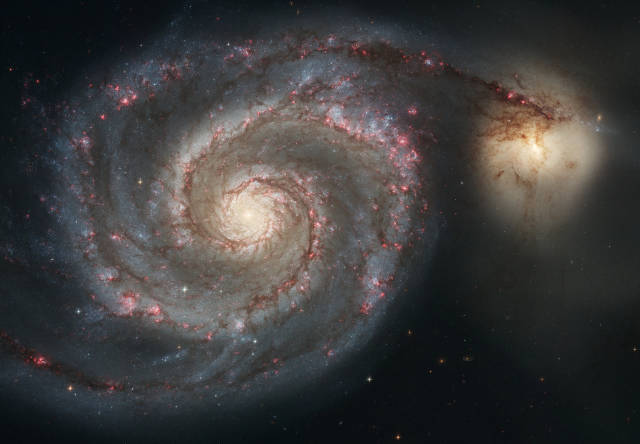
9. Tell me this doesn’t look like some translucent biological material! In reality it’s a huge Whirlpool Galaxy in the process of merging with a smaller galaxy.
 View 31 photos
10. Now we’re looking at some galaxies far-far away. The Virgo Cluster is located 55 million light-years away from Earth. Can you imagine this distance? This is how the cluster looked back when dinosaurs ruled the world. Think about it.
 View 31 photos
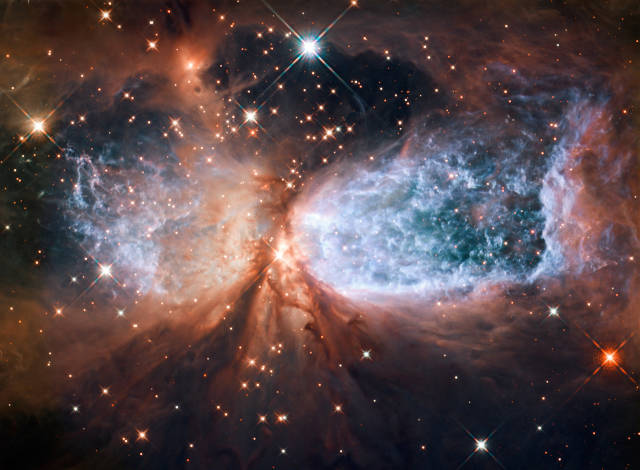
11. This is where stars are being formed in the Cygnus, or Swan, constellation.
 View 31 photos
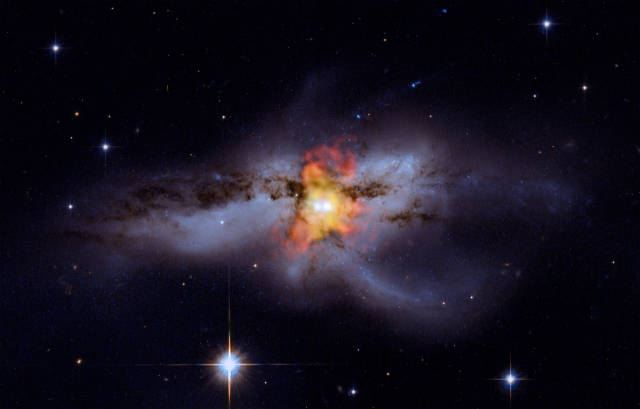
12. 30 million years ago these two supermassive black holes started their merging dance. I wonder how they’re doing right now.
 View 31 photos
13. These merging spiral galaxies have already caused three supernova explosions in the last 15 years!
 View 31 photos
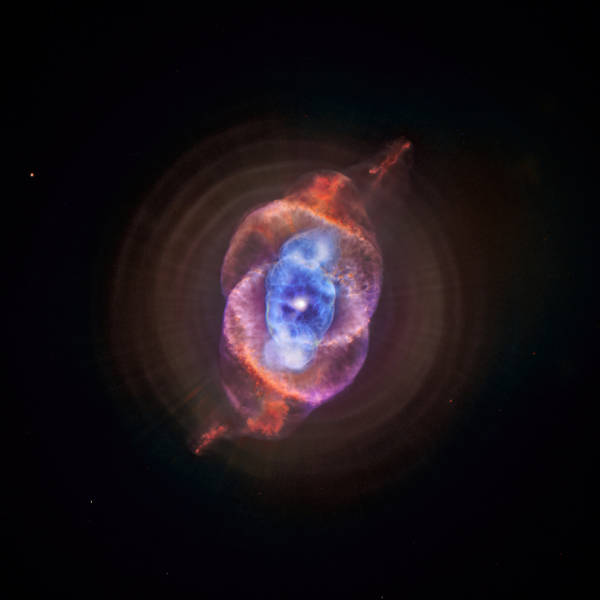
14. One of the most recognizable nebulae – the Cat’s Eye Nebula – is a planetary nebula located 3,000 light-years away from Earth. 5-6 billion years from now, our own Sun will experience this phase of stellar evolution as well.
 View 31 photos
15. You’ve probably seen the Horsehead Nebula before, as it’s also one of the popular stellar “kids”. It is a dark nebula located in the Orion constellation.
 View 31 photos
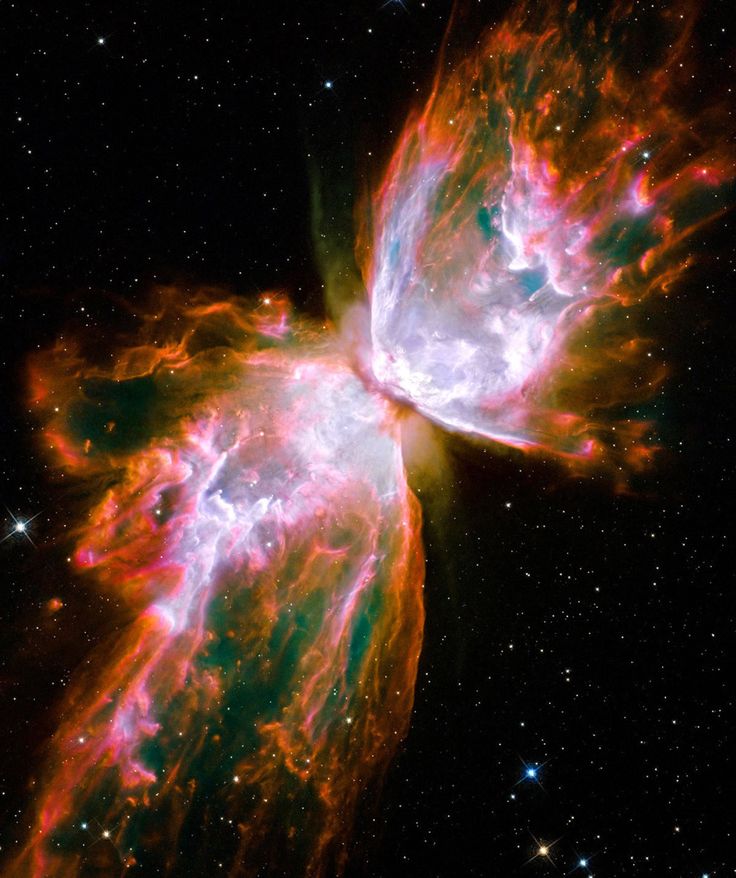
16. The most glorious of all the nebulae – the Butterfly Nebula – is a planetary nebula in the Scorpius constellation that contains one of the hottest known stars in the Milky Way (~250,000 degrees Celsius).
 View 31 photos
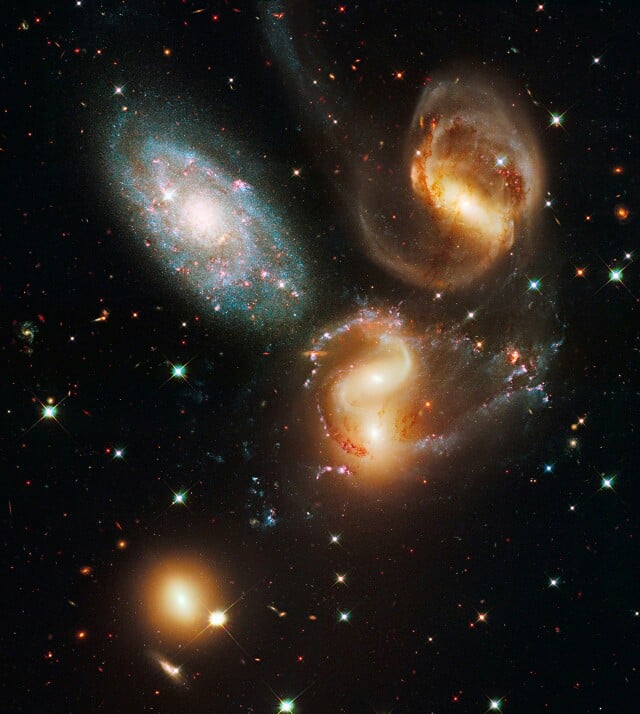
17. Stephan’s Quintet is a group of five (hence the name) galaxies in the Pegasus constellation.
 View 31 photos
18. The absolutely most recognizable nebula on this list is the Pillars of Creation, an active region of star formation in the Milky Way. Looks freaking fantastic.
 View 31 photos
19. And finally we have the Sombrero Galaxy with a diameter of 50,000 light-years (!!!), which is about 30% the size of the Milky Way. Holy Bloody Mary! That’s one colossal cosmic crepe!
 View 31 photos